
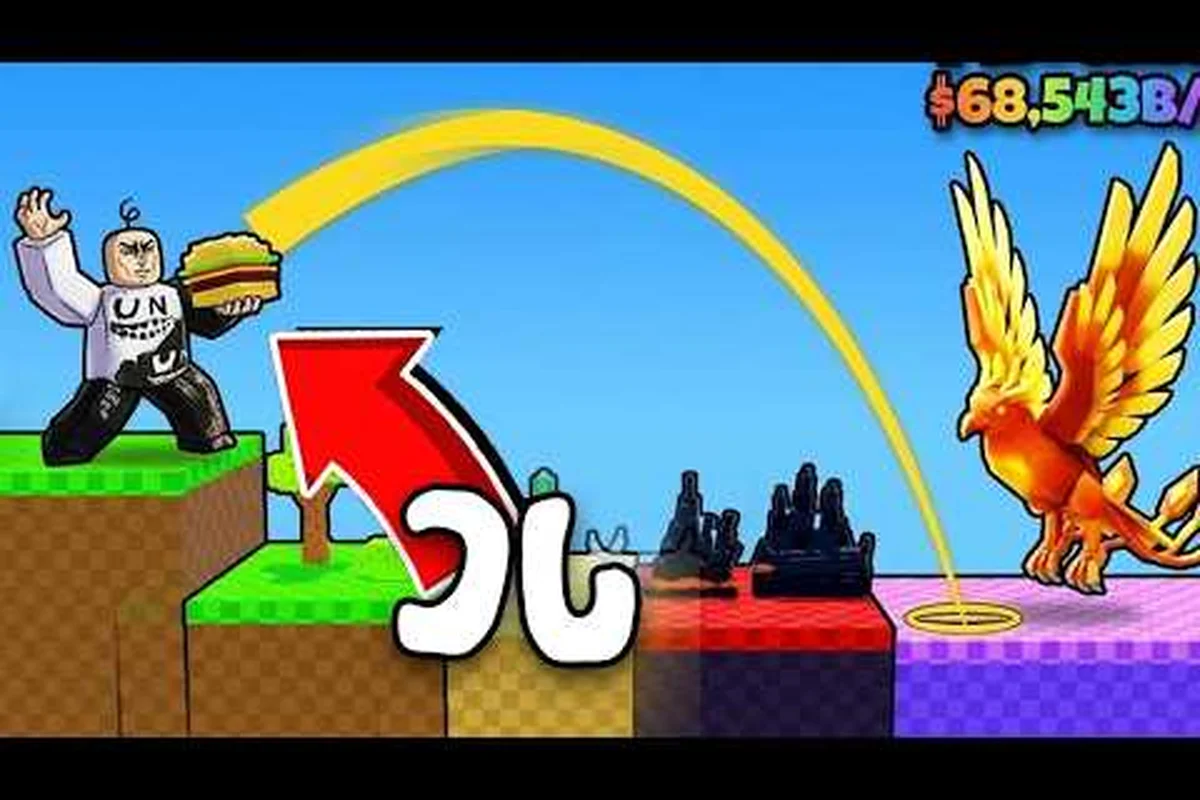
Understanding the Throw Food For Animals Roblox experience matters because its unusual progression loop has already attracted a large audience. The game turns food into a tool for attracting animals, while its developer, community, and roadmap reveal how that audience is likely to grow.
Throw Food For Animals Roblox Experience Overview
The Throw Food For Animals Roblox experience combines a simple physical objective with several connected progression systems. Players throw food to lure animals, collect the animals they attract, earn money from their collection, and use that money to acquire stronger food and better equipment. Throw Power also matters because it improves casting distance, which can lead players toward newer areas and rarer animals.
According to the official Throw Food For Animals game page, the experience launched on September 18, 2026. A data snapshot taken on October 31 recorded more than 18 million visits, roughly 131,000 players online, and over 28,000 favorites. These figures make the Throw Food For Animals player count one of the strongest indicators of early interest, although live activity naturally changes throughout the day.
| Verified metric | October 31, 2026 snapshot |
|---|---|
| Visits | 18.3 million-plus |
| Players online | Approximately 131,000 |
| Favorites | 28,100-plus |
| Maximum players per server | 5 |
| Launch date | September 18, 2026 |
| Latest recorded update | October 30, 2026 |
Core Gameplay Loop
The central activity is straightforward: select food, throw it, wait for animals to approach, and collect the attracted creatures. The full loop turns each cast into a decision between immediate results and future progression, because every useful collection can earn money, while a poorly timed throw may leave the food scattered and produce no worthwhile animal. This makes the Throw Food For Animals Roblox experience approachable at the start, but its economy adds several layers of long-term goals: players must balance cheaper foods against the value of rarer animals, then reinvest earnings to expand their collection and improve their next throws.
Food quality influences which animals appear, while better food generally attracts rarer animals. Animals can produce money after being collected, creating a cycle in which successful throws fund stronger throws and new collections. Players also train at pull-up stands to increase Throw Power, which supports longer casts and access to stronger wildlife farther into the progression.
| System | Player action | Immediate result | Longer-term purpose |
|---|---|---|---|
| Food throwing | Aim and cast different food | Animals gather near the landing area | Attract and collect valuable species |
| Animal collection | Approach attracted animals | New animals join the collection | Generate income and improve the roster |
| Throw Power training | Use a pull-up stand | Casting strength rises | Reach distant areas and rarer animals |
| Money economy | Earn money from collected animals | Purchase better supplies | Accelerate food and equipment progression |
The Throw Food For Animals fan community describes the loop in practical terms: early progress depends on understanding which foods are worth buying, not merely throwing whatever is available. A weak throw may scatter food without producing a worthwhile collection, so distance, timing, and food selection all influence efficiency.
Throw Power and Area Progression
Throw Power is the clearest link between training and exploration. Rather than making every animal available immediately, the game uses casting range as a progression gate. A stronger throw can carry food farther, where different areas contain more valuable wildlife.
Training at Pull-Up Stands
Pull-up stands provide a repeatable activity that directly supports the throwing system. Players can train when they have enough food or money to pursue a rarer species, which creates a natural decision: strengthen the current setup first, or accept a smaller catch and save resources.
| Progression choice | Immediate benefit | Longer-term effect |
|---|---|---|
| Improve Throw Power | Longer cast range | Access to stronger and rarer animals |
| Buy better food | More attractive bait | Better results from a successful throw |
| Collect existing animals | More passive income | Faster saving for upgrades |
| Explore a distant area | New wildlife opportunities | Potential access to valuable species |
This structure gives the Throw Food For Animals Roblox experience a satisfying rhythm. Early play centers on establishing a dependable income, while later play opens more technical questions about range, bait efficiency, and which animals offer the best return. The complete beginner guide can help new players organize those priorities before optimizing a later collection.
Why Distance Changes the Hunt
Food quality alone cannot produce a rare animal if the cast falls short of the correct habitat. Distance therefore affects both the player’s available choices and the value of each attempt. Weak casts may be useful near the beginning, but they become less efficient once stronger options become available.
Players should also avoid treating every visible animal as an automatic goal. A rare species may require a large investment of food, training, and travel. Comparing the expected value of a cast with the cost of reaching the area prevents a common progression mistake: repeatedly spending on high-tier food before the character can reliably deliver it to the right location.
Developer Ownership and Official Presence
The Throw Food For Animals Roblox experience is associated with the Roblox group Goofy Chupacabra, whose official Goofy Chupacabra group page lists more than 23,000 members in the October snapshot. The group account associated with ownership carries a verified badge, and the game page identifies Goofy Chupacabra as the creator.
| Attribution point | Verified detail |
|---|---|
| Developer group | Goofy Chupacabra |
| Group identifier | 670988975 |
| Group size | More than 23,000 members |
| Verified ownership | Group-owned account carries a verified badge |
| Official game location | Roblox experience ID 120219252362013 |
| Universe identifier | 10766972131 |
What Official Information Confirms
The official game page provides the strongest confirmation of the core experience, including throwing food, attracting animals, collecting income-producing animals, purchasing better food, training Throw Power, and exploring stronger regions. These details are presented as the game’s current design rather than as ideas submitted by players.
The official group page is the appropriate place for direct community announcements associated with the developer. Because groups and game pages have different functions, community members often treat announcements spread across social channels as supplementary. A broader developer profile of Goofy Chupacabra can also help distinguish official ownership from similarly named accounts.
Community Claims That Need Caution
Community guides sometimes describe group-member benefits such as boosts or rewards. The available reporting identifies these perks as unconfirmed by the developer, so they should not be treated as guaranteed features. This distinction matters when evaluating Throw Food For Animals developer news because fan-created reward lists can spread faster than official confirmations.
Reliable updates should meet at least one of these standards: a post linking to the official Throw Food For Animals Roblox game page or the official Goofy Chupacabra group page; a statement published by an account identified as the game’s creator or a studio representative; or a community report that clearly labels the information as unverified. This helps separate confirmed developer news and studio plans from fan speculation, especially when reward claims, player counts, or new features circulate through the Throw Food For Animals fan community.
-
They appear on the official Roblox game page or official Goofy Chupacabra group page.
-
They come directly from an account identified as the game’s creator or studio representative.
-
They are described by community reports while being clearly labeled as unverified.
Throw Food For Animals Player Count and Growth
The Throw Food For Animals player count shows unusually strong launch momentum. On October 31, the official page showed approximately 131,000 concurrent players, while visit totals exceeded 18 million. A separate research snapshot recorded about 118,000 concurrent players, illustrating how quickly Roblox activity can shift even within the same day.
| Popularity measure | Reported value | What it indicates |
|---|---|---|
| Total visits | 18.3 million-plus | Broad discovery beyond the initial audience |
| Concurrent players | Roughly 131,000 | Strong active interest at the snapshot |
| Favorites | 28,100-plus | Players marking the game for later |
| Group members | 23,000-plus | A substantial official community footprint |
| Session size | Up to 5 players | Small-server design encouraging direct play |
The difference between the two concurrent-player figures is useful context rather than a contradiction. Roblox player totals depend on the hour, regional activity, update timing, and whether a particular server is included in the visible count. Any analysis of Throw Food For Animals player count should therefore use a timestamp instead of presenting one number as permanent.
Why Five-Player Servers Matter
The five-player limit creates a small-server atmosphere. Players can meet others without dealing with a crowded lobby, and the limited capacity may make progression feel more manageable. It also places greater emphasis on group discovery, since a new player can encounter people using similar strategies instead of a large population with wildly different objectives.
The popularity picture is also supported by community discussion, but community data should remain supplementary. The player-count analysis explains how visit totals, favorites, server size, and group membership fit together without treating anecdotes as official measurements.
Throw Food For Animals Developer Plans and Future Direction
The latest recorded game update occurred on October 30, 2026, only a day before the snapshot used for this overview. That recency shows an actively maintained project, but it does not by itself establish a long-term roadmap. Any claimed Throw Food For Animals developer plans beyond confirmed features should be treated as speculation unless the studio announces them directly.
Confirmed Development Direction
The present design points toward continued refinement of several connected areas, especially the relationship between Throw Power, cast range, and the distance at which stronger wildlife appears. For example, improving throw feedback could make the transition from nearby animals to farther targets easier to read, while clearer goals for pull-up stands and collection milestones could connect those upgrades to specific gameplay decisions rather than leaving progression dependent mainly on repeated throws.
| Likely development area | Current foundation | Plausible improvement focus |
|---|---|---|
| Throwing | Food choice, cast range, Throw Power | Better feedback and progression balance |
| Collection | Animals gathered through throws | More goals and collection incentives |
| Economy | Animals generate money; money buys food | Stable prices and meaningful upgrade choices |
| Training | Pull-up stands improve Throw Power | Clearer goals and reward pacing |
| Areas | Greater distance reveals stronger wildlife | Additional destinations and wildlife tiers |
These are reasonable implications of the existing systems, not confirmed patch notes. A careful reader should separate the current game design from a future roadmap. The upcoming update overview can serve as a chronological record once confirmed changes appear on the official page.
Reading Studio News Carefully
Throw Food For Animals studio news may include small changes to food values, animal rewards, training rates, interface elements, or server behavior. Because a balance adjustment can alter the fastest progression route, players should record their setup before testing a major update. Comparing earnings per cast, food consumption, and the time required to improve Throw Power produces more useful information than simply noting that an update occurred.
The strongest announcement hierarchy is straightforward: official game-page changes come first, group notices come next, and community reports provide context afterward. The beta and version history is most useful when it preserves that distinction and dates each change.
Community Culture and Player Expectations
The Throw Food For Animals fan community is already large enough to support shared progression advice, collection planning, and feedback about balance. Yet the official game page remains the primary source for mechanics and availability. Community reports are valuable for practical details that may not appear in formal documentation, such as which food performs well at a particular stage or how players interpret ambiguous cues.
Community Information Sources
| Source type | Best use | Reliability note |
|---|---|---|
| Official game page | Mechanics, update status, basic access | Highest authority |
| Official group page | Studio notices and direct community access | Strong for confirmed announcements |
| Player reports | Practical observations and early reactions | May vary by version |
| Community guides | Builds, progression ideas, reward claims | Verify unconfirmed benefits |
| Fan media | Tutorials and broader awareness | Useful but not official documentation |
Community evidence becomes especially valuable after a patch because players can document behavior faster than formal references change. Still, anecdotes should be tested rather than generalized. One player’s successful route may depend on animal availability, session conditions, or a different balance version.
Expectations Created by Rapid Growth
Strong early attendance creates pressure for consistent support. New players expect clear progression, fair economy, and useful updates, while established players expect advanced food tiers and distant wildlife to remain worthwhile. The small server size may strengthen that sense of shared progression, especially when groups can compare results without huge public lobbies.
The developer’s most important challenge is preserving that early momentum while refining the loop. Too many systems introduced together could overwhelm newcomers, while too little progression could shorten the experience. Changes that improve clarity, balance, and variety are therefore likely to matter more than simply adding another food or animal.
Practical Overview of the Experience
For someone evaluating the Throw Food For Animals Roblox experience, the strongest case is its combination of accessibility and layered progression. The immediate action is easy to understand, yet Throw Power training, food tiers, exploration, and passive income create different priorities at different stages.
For a first session, aim to complete several successful casts before spending heavily: use an accessible food item to learn the throw-and-collect loop, then compare the income from the first collection with the cost of the next tier. This makes it easier to judge whether upgrading is worthwhile while keeping Throw Power training and movement between animal areas as the main progression goals.
| Stage | Practical objective | Useful checkpoint |
|---|---|---|
| First minutes | Learn the throw-and-collect loop | Land food near an accessible animal |
| Early session | Build a dependable starter collection | Identify a reliable early earner |
| Mid session | Improve food and begin Throw Power training | Compare cost per useful collection |
| Late session | Test longer casts toward stronger areas | Verify whether distance pays for itself |
| Returning session | Review updates and economic changes | Adjust purchases after balance updates |
Players should measure progress by income per successful cast and by whether a new food tier produces a meaningful improvement. A more expensive item is not automatically better if the character cannot reach the correct area or cannot afford to experiment.
Overall Assessment
Throw Food For Animals Roblox experience overview summaries should recognize both sides of the project. Its accessibility, compact servers, and rapid growth indicate strong early product-market fit. At the same time, the limited five-player format and economy-driven progression make balance decisions important, particularly while the game continues to change.
The available Throw Food For Animals developer news supports one careful conclusion: the game launched, gathered a large audience, and received a recent update. It does not support claiming a detailed future schedule. Likewise, the Throw Food For Animals fan community is already influential, although community rewards should remain distinct from official promises.
Frequently Asked Questions
Who developed Throw Food For Animals?
Throw Food For Animals was created by the Roblox group Goofy Chupacabra. Its official group page identifies the creator and shows a community of more than 23,000 members in the October 31, 2026 snapshot. The group-owned account associated with ownership also carries a verified badge, helping players distinguish the legitimate studio presence from unrelated accounts.
How many players are playing Throw Food For Animals?
The Throw Food For Animals player count was approximately 131,000 concurrent players on October 31, 2026, according to the official game-page snapshot, with more than 18.3 million total visits. A separate research snapshot recorded around 118,000 concurrent players, showing how quickly activity can change across different measurement times.
Does Throw Food For Animals have confirmed developer plans?
There is no detailed public roadmap confirmed in the available reporting. The game received an update on October 30, 2026, and its current systems clearly support future improvements, but Throw Food For Animals developer plans should only include items announced directly by the studio. Community predictions can be useful for anticipating trends, although they are not commitments.
What is the main progression system in the game?
Players throw food to attract animals, collect them, earn money, and purchase stronger supplies. Training at pull-up stands improves Throw Power, enabling longer casts toward stronger wildlife in more distant areas. Because food quality, casting distance, and animal value all interact, the best upgrade depends on the player’s current stage rather than one universal choice.
Is the Goofy Chupacabra group offering confirmed member rewards?
Some community guides mention member boosts or rewards, but the available reporting does not confirm those benefits as official features. Players should treat Throw Food For Animals fan community reward claims as unverified until they appear in an official group notice or on the game page. This avoids confusing community-created reward lists with guaranteed developer programs.