
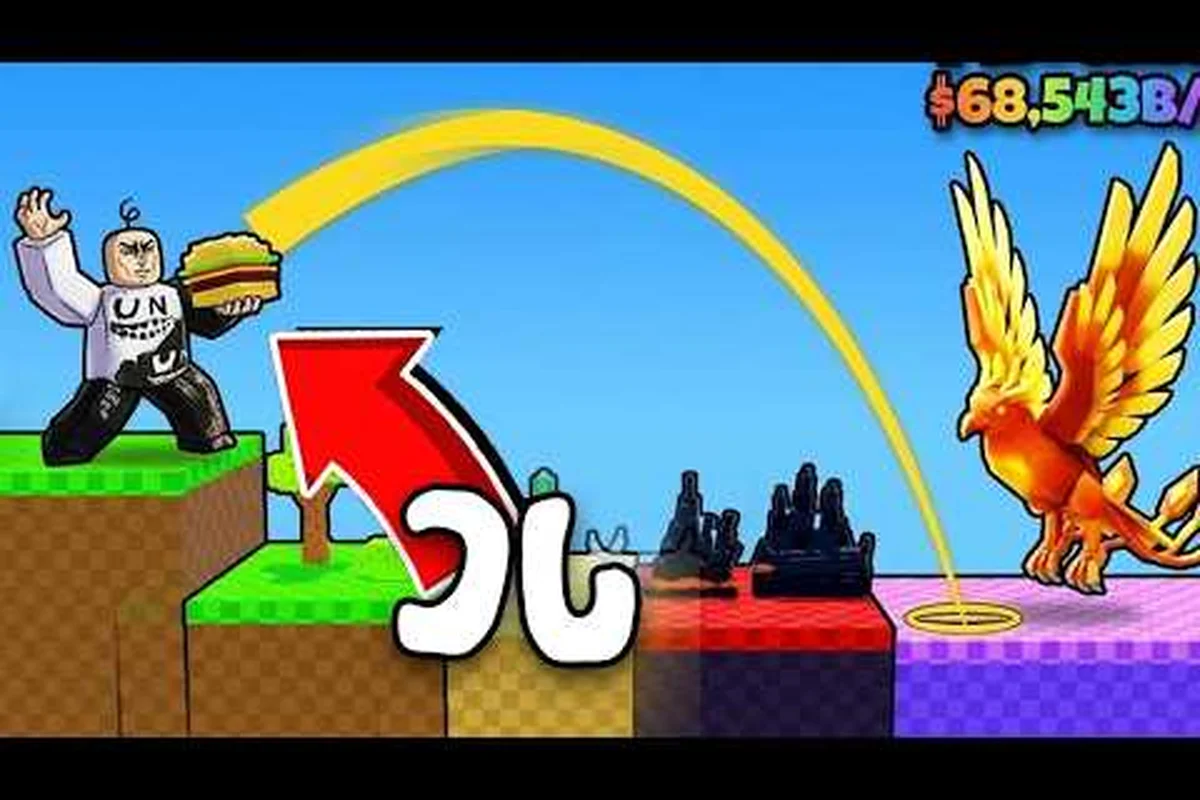
The Throw Food For Animals release date determines how long this Roblox game has been available and how quickly its community formed. Knowing the launch date also helps explain its current popularity, free-to-play access, and typical server activity.
Release Date Overview
The exact Throw Food For Animals release date is best verified from the game’s official Roblox listing rather than inferred from a video upload, fan account, or community announcement. That distinction matters because early promotional clips can appear before the experience is publicly playable, while private testing dates may precede the official launch.
The game’s official Roblox presence is the most useful source for checking the original publication date, current access status, and developer information. These fields can change in different ways: the listing may receive updates, while its earliest published date remains the key reference for the launch. A follower count or recent social post does not establish when the game first opened to players.
| Detail | What it tells you | Best verification method |
|---|---|---|
| Original publication date | The earliest official public listing date | Roblox game page and its “About” section |
| Most recent update | Whether the experience is actively maintained | Roblox game page and update history |
| Access price | Whether players can join without buying the game | Roblox store listing |
| Creator | Who operates the game | Roblox creator or group information |
| Current player activity | How active servers are right now | Roblox game page and server browser |
This distinction also matters when comparing the official launch with later popularity milestones. A game can remain available for months while continuing to attract new players because of short videos, updates, or creator-driven interest. Community reports about its growth are useful for context, but they should not replace the official release record.
Publication Date Versus First Community Appearance
Several dates may appear in the online record of a new Roblox release. The official listing establishes the publication date, while early footage or community posts may document testing, invitations, and the first public sessions. These are not interchangeable, especially when the question is whether the game is ready for a broad audience.
The official publication date is the cleanest response to the throw food for animals when was it released question. The first public appearance may be earlier, but it might refer to a closed test, creator showcase, or limited test group. For steady historical analysis, the listing date offers a consistent reference point that readers can revisit later.
Why the Launch Date Matters
The release date establishes the timeline for Throw Food For Animals, a Roblox game, and helps place its current progression systems, updates, and player activity in context. For example, early portions of the Roblox experience may focus on learning the food-throwing mechanics and earning progress, while later play can involve higher-level objectives and more developed server communities. Using the launch date as a fixed reference point makes it easier to calculate how long the game has been available and to compare its early development with its present state without confusing the original release with a later update.
-
It shows how much time the game has had to develop an audience.
-
It separates launch-period novelty from sustained community interest.
-
It provides a baseline for measuring the impact of updates.
-
It helps explain whether a title is newly launched or an established experience.
Players who want additional context can use the beginner guide for Throw Food For Animals after checking the launch record. That combination answers two different needs: the date explains when the game arrived, while the guide explains what a new player can expect once inside.
Confirming the Original Roblox Launch
To confirm the throw food for animals launch date, begin with the official Roblox game listing and locate the “About” section. Look for the earliest publication date rather than an update date, recent activity label, or favorite count. If the listing displays only a relative creation message, Roblox’s game details, API information, or a cached official record may provide the exact date.
Do not confuse the date shown in a favorite count with a release date. Roblox pages may show “favorited,” “favorited 2 weeks ago,” and similar activity summaries that reflect when a user favorited the game, not when the listing was published. Likewise, a newest-update marker says when the developer most recently changed the experience.
| Step | Action | Reason |
|---|---|---|
| 1 | Open the official Roblox listing | Avoid unofficial or copied game pages |
| 2 | Find the “About” information | The original publication date should appear there |
| 3 | Separate publication from update dates | Recent revisions are not a new launch |
| 4 | Confirm the creator and access price | These help verify that the listing is the correct experience |
| 5 | Note the check date | Availability and activity can change over time |
This verification process is especially important when someone asks about the throw food for animals roblox game because unofficial Roblox experiences can use similar names. Matching the creator, URL, description, and supported-device information protects against confusing the listing with another user’s project.
What If the Listing Shows Only a Relative Date?
Relative labels can make an older listing look newly created. When that happens, do not guess from a social post. Search the official title with its creator information, inspect the game’s details, or check the Roblox API record associated with that universe. The goal is to recover the stored creation or publication date, not infer it from recent popularity.
For example, if the Roblox listing displays only “a few weeks ago,” compare that label with the game’s universe record and the date shown in its creation or publishing details. For Throw Food for Animals, treat that recovered timestamp as the candidate launch date, then record whether the game’s free-to-play status, ownership, or active servers had changed when you checked it.
-
The original publication date shown by the official listing.
-
The date when the information was last checked.
-
Any notice that the listing’s ownership, availability, or update status changed.
Those notes make the answer more useful than a single unsupported date, especially for readers comparing Throw Food for Animals’ original Roblox publication date with later growth in players per server, active servers, and free-to-play status. For example, a listing created before a major update may still display a recent relative timestamp, so separating the universe creation date from the latest version publish date helps explain why the game’s apparent “age” and current popularity point to different periods.
Free-to-Play Status and Initial Access
Throw Food For Animals is presented as a free-to-play Roblox experience, so the core game can be available without purchasing access through Roblox. The standard distinction is that entering the game does not require buying a separate game pass, although optional in-game purchases or passes may exist for additional features or progression.
That distinction is important for the throw food for animals free to play question. “Free to play” does not necessarily mean every item is free, nor does it guarantee that all of the game’s content remains unchanged. Optional products may provide convenience, cosmetic choices, faster progression, or extra rewards, so players should review the current store before making a purchase.
| Access item | Typical meaning in a Roblox release |
|---|---|
| Base game entry | The main experience can be joined through the platform |
| Optional game pass | A separate paid feature or convenience |
| Premium currency | Robux used for platform purchases or eligible items |
| Free progression | Base items and upgrades earned without an optional paid pass |
Players who want a clear spending strategy can consult the free-to-play progression guide. The important release-related fact is that accessibility helped the game reach a wider Roblox audience without a conventional paid purchase at the doorway, although paid options may still exist inside the experience.
Free Access Does Not Mean Every Feature Is Included
Launch information often lists a game as free, but that label normally describes the initial access model rather than every possible service or upgrade. Roblox accounts may also require age-appropriate settings, parental approval, or private purchase controls. Those platform rules affect access without changing the game’s launch history.
For Throw Food For Animals, the launch-date question and the free-to-play label should be treated as separate facts: its Roblox release identifies when the game entered the platform’s catalog, while the business model describes how access and monetization work afterward. A date such as the game’s original launch does not imply that every future update, limited-time event, or premium animal was available on day one. This distinction matters when tracing the title’s release history, because early access can begin before optional passes or products are introduced, and later additions can change the value of a “free” account without rewriting the original Roblox release date.
-
The game’s base listing is available through Roblox.
-
Optional passes or products can offer added value.
-
Roblox’s own account and purchase settings still govern what an individual player can buy.
The “free” label on Throw Food For Animals refers to the base Roblox experience, not a guarantee that every animal, game pass, or upgrade is free or present at launch. Optional passes and products can add convenience or bonuses, but Roblox purchase controls, parental settings, and account restrictions still determine whether a player can access them. Thus, the title’s original Roblox release date, its free-to-play status, and the availability of later monetization should be checked separately rather than inferred from a single “free” description.
Server Population and Players per Server
The number of players per server depends on the experience’s configured server capacity and the population joining at the time. A server listing can show a current total that changes throughout the day, so it should never be treated as the game’s permanent launch-day audience.
Community observations indicate that Throw Food For Animals can attract meaningful concurrent activity, particularly when new videos, updates, or creator interest circulate. However, no stable number should be claimed without a dated observation. Server counts and active-player totals fluctuate, and the figures visible in one session may be very different from those shown later.
| Metric | What it represents | Why it changes |
|---|---|---|
| Players per server | Current attendance in a selected server | Players join, leave, or move between sessions |
| Total concurrent players | Attendance across visible servers | Activity varies by time and platform |
| Favorites | Users who marked the listing as a favorite | Not an active-player count |
| Unique visitors | People who opened the listing | Includes non-players |
| Peak server size | High-water mark during a session | Depends on the observation window |
For a deeper look at how this metric relates to the game’s audience, the player-count analysis for Throw Food For Animals explains why current activity and historical popularity should be evaluated separately.
Reading Server Data Without Overstating It
A single screenshot can suggest that a server is full when it is merely busy at that moment. To assess activity responsibly, record the date, time, and whether the observation came from Roblox’s server browser. Avoid combining favorite totals, concurrent players, and unique visitors into one headline number because each represents a different behavior.
The launch date provides a useful time anchor. If the game has been available for a substantial period, current participation reflects both its original audience and the cumulative effect of discovery. If the release was recent, a short spike may be tied to launch coverage rather than a settled community pattern.
| Question | Reliable response |
|---|---|
| Does one full server prove the game is permanently popular? | No, it reflects a single moment |
| Do favorites equal active players? | No, favorites are a separate metric |
| Can player numbers differ by server? | Yes, because players distribute unevenly |
| Is the launch-day crowd the same as today’s crowd? | Usually not, especially after updates |
| Should community reports be treated as official statistics? | No, they need a date and source |
How Old Is the Game?
To determine throw food for animals how old is the game, subtract the official publication date from the date being checked. Because the exact year and day may need to be taken directly from the official listing, the age should be expressed as a dated calculation rather than a vague phrase like “recently launched.”
A clear example would state the original publication date, give the calculation date, and explain that the game has been available for a stated number of months or years. The same game age can sound different depending on whether it has passed a first anniversary, entered its second calendar year, or recently marked a milestone. Exact elapsed time is more precise than marketing-style descriptions.
| Age format | Example use | Clarity |
|---|---|---|
| Calendar years and months | “Available for two years and three months” | Strong |
| Approximate months | “Publicly available for about 27 months” | Acceptable with check date |
| “New” | Only useful immediately after launch | Weak over time |
| “Old” | Provides little useful information | Very weak |
| Anniversary milestone | Useful for a release-history timeline | Strong when dated |
The game’s age does not indicate whether it is still receiving updates. Developers can revise a Roblox experience long after publication, and update activity is best checked separately. For upcoming changes, the current update article provides a place to track reported development activity without confusing it with the launch date.
Why Calculated Age Can Mislead
An age calculated from a rounded year can obscure useful detail. If a title launched in late December and the check occurs in early January, “one year old” is technically reasonable but less informative than the exact dates. Similarly, a game launched during a viral event may have a short public history despite already having a large audience.
Use a neutral calculation method: compare the confirmed Throw Food For Animals launch date with the selected reference date, count elapsed calendar time, and express the result as complete years plus any remaining months and days. For example, a release on December 24 and a reference date of January 3 yields one year, one month, and ten days—not merely “one year old.” This preserves the precision needed when discussing the Roblox game’s release date without mistaking a rounded anniversary for its exact launch date.
-
Confirm the original official publication date.
-
Record the date on which the age is calculated.
-
Calculate complete years, remaining months, and days if precision matters.
-
State that the result measures public availability rather than the creator’s private development period.
-
Recheck the listing if the article is being updated much later.
This approach avoids turning a community estimate into a fact and makes the result reproducible. For the Throw Food For Animals Roblox game, label each source as an official launch-date record, an archived Roblox listing, or a community-reported estimate, then use the two strongest records to resolve conflicting dates. If the official page was edited after release, retain the archived timestamp and compare it with the earliest public announcement; that separates the original publication date from later updates. The final calculation should identify its reference date explicitly, so readers can reproduce the age of the Roblox game without confusing a community estimate with the confirmed launch date.
Release History, Updates, and Community Growth
The launch was only the beginning of Throw Food For Animals’ public history. A Roblox title can gain attention through mechanics, short-form videos, player behavior, creator coverage, and regular updates. Consequently, its popularity history may contain several distinct phases rather than one uninterrupted climb.
Community reports often connect spikes in attention to particular videos or updates. Those reports are useful for understanding why audience numbers moved, but the official listing remains the primary source for dates and developer details. A community observation should always include a timestamp because popularity can change within hours.
| Development phase | Typical evidence | What can be stated responsibly |
|---|---|---|
| Pre-release period | Announcements or limited access | The game was being prepared or tested |
| Public launch | Official Roblox publication date | The game became publicly listed |
| Growth phase | Rising visits, videos, and reports | Interest expanded beyond the initial audience |
| Update periods | Version history and community discussion | The developer adjusted the experience |
| Current period | Live server data | Present activity, not permanent popularity |
People looking for background on the creator and studio can also read the developer profile for Goofy Chupacabra Games. Keeping the developer, release, and update records connected creates a clearer history than treating each fact as an isolated search result.
Separating Facts From Community Interpretations
A robust release history distinguishes three layers. The first layer consists of platform facts, including publication date, current price, developer, and update availability. The second layer contains dated platform observations, such as server populations on a particular afternoon. The third layer is community analysis, which can explain viral spread or speculate about future development without proving official plans.
| Claim type | Example | Reliability |
|---|---|---|
| Platform fact | The listing shows a free base entry | High when checked directly |
| Dated observation | A server displayed 20 players at a stated time | Valid for that moment |
| Community report | Players attributed a traffic increase to a viral clip | Useful context, not a metric |
| Developer statement | A planned update has a confirmed schedule | High when officially announced |
| Rumor | An unannounced feature will arrive soon | Low unless confirmed |
This distinction also protects the answer from exaggerated longevity claims. A game may have launched recently but built a large following quickly, or it may have launched earlier and recently regained attention. The official date and dated observations tell different parts of that story.
Frequently Asked Questions
When was Throw Food For Animals released?
The official Roblox listing is the best authority for the exact Throw Food For Animals release date because its publication information records when the experience became publicly listed. Community posts and videos may document earlier testing, so those dates should not replace the platform record. Check the listing’s “About” section and note the verification date.
What is the Throw Food For Animals launch date?
The launch date is the original publication date shown on the official Roblox game listing. That is generally more precise than the date of a trailer, social-media announcement, or creator video. Later update dates do not create a new launch, because they only show when the developer most recently revised the existing experience.
How old is Throw Food For Animals?
Its age is calculated by comparing the official publication date with the date on which the information is being checked. Expressing the result in complete years and remaining months avoids the vague labels “new” and “old.” The result measures public availability, not the creator’s private development period or the earliest recorded test.
Is Throw Food For Animals free to play?
Yes, the game’s base experience is available as a free-to-play Roblox game. Optional passes or in-game purchases may provide additional features or progression, while Roblox account settings and age controls govern individual purchases. The free-to-play progression guide explains how to separate the base game from optional benefits.
How many players are in each Throw Food For Animals server?
The visible player count depends on Roblox server capacity and the players connected when you check. Because attendance changes throughout the day, a single number should always include its date and time. Favorites and unique visitors are separate statistics and should not be presented as the number of active players per server.
In summary, the official Roblox publication date is the most reliable answer to the Throw Food For Animals release date question. Use it to calculate the game’s age, separate original launch information from later updates, and interpret server activity as a dated snapshot rather than a permanent statistic.